
UPVC Window Profile Series Explained: 50, 60, 65, 80, 88 and 112
A UPVC window profile series number — 50, 60, 65, 80, 88 or 112 — is a naming code for the nominal depth of the profile system, conventionally read in millimetres. It describes how much depth the frame and sash sections offer for chambers, steel reinforcement, glazing and hardware. It does not, by itself, describe the thermal, acoustic or water-tightness performance of the finished window.
That distinction matters most at the evaluation stage, when several quotations look similar on paper. Two windows described as "60 series" can be built to very different specifications, and a 112 series window is not automatically a better window than a 65 series one. The number tells you which family of profiles you are looking at. The performance of the window comes from the full build: profile wall thickness, reinforcement, glass make-up, gaskets, hardware and installation.
This guide decodes the six series named in the ECM attestation scope held for Foshan Nanhai Yuanzhaiji UPVC Door & Window Factory, a UPVC door and window manufacturer established in 2009: 50, 60, 65, 80, 88 and 112. It explains what the designation indicates, how the choice relates to sliding, casement and tilt-and-turn windows, and where the series number stops being a useful decision criterion.
Why the series number is so often misread
Three problems cause most of the confusion.
- The number looks like a grade. Buyers read 112 as "better than 88" the way they read a higher model number on a phone. The number tracks depth, and extra depth only helps when the project actually needs the room it creates — for heavier glazing, larger sashes, multi-track sliding hardware or a deeper structural section.
- Series codes and model codes get mixed together. A factory may label a window build with its own model code — for example HF60, BR58, WYK75-1 or HF88-L — alongside the profile series. A model code identifies a window configuration the factory builds; the series identifies the profile family underneath it. Ask which is which in the quotation.
- Different extruders use the same numbers. The depth convention is shared across the industry, but wall thickness, chamber layout, additive package and reinforcement design are not. A 65 from one supplier and a 65 from another are the same nominal depth class, not the same product.
Separate those three points and the number becomes a useful orientation tool instead of a substitute for a specification.
Where the numbering convention comes from
UPVC profile systems are published in a small number of depth classes so that fabricators can match hardware grooves, reinforcement profiles, gaskets and glazing beads across a product range. That is why the same set of numbers reappears in catalogues from different extruders and different countries. The code is a shorthand for the system's depth class — not a certification mark and not a performance declaration.
China's profile supply is concentrated in a few clusters, and Foshan Nanhai is one of the recognised manufacturing bases for UPVC profiles and windows. An industry publication on the Foshan cluster estimates service lifespans of 30 to 40 years for high-quality UPVC profiles. That figure describes the profile material under favourable conditions; it is not a warranty on a finished window, and it depends on wall thickness, stabiliser package, UV exposure and installation.
For a buyer, the practical consequence is that the series number opens a specification conversation rather than closing one. The questions that follow — wall thickness, chamber count, reinforcement, glass, gaskets — are where the real differences between quotations sit.
What the series number actually measures
The number refers to the profile's nominal depth: the front-to-back dimension of the frame section, which is also roughly the dimension that has to fit inside the wall reveal. A 60 series system is nominally about 60 mm deep; an 112 series system is nominally about 112 mm deep.
Two caveats belong next to that definition. The figure is nominal — naming practice and small dimensional differences exist between extruders, so the exact depth, wall thickness and chamber geometry should be read from the supplier's profile drawing rather than inferred from a catalogue code. And depth is a single dimension: it says nothing about how the profile is built internally.
Within the trade, depth is used as a proxy for how much the system can carry:
- Chamber space. Deeper sections generally allow more or larger internal chambers, the structural basis for thermal separation.
- Reinforcement cavity. Deeper profiles typically provide a larger cavity for galvanised steel reinforcement, which affects stiffness and the ability to hold large sashes without deflection.
- Glazing rebate. Rebate depth limits the thickness of the sealed glazing unit the system can accept, which decides whether a double or triple glazed unit is feasible.
- Hardware and sash overlap. Multipoint locking, tilt-and-turn hardware and sliding sash overlaps all need physical room inside the section.
Those are general relationships, not guarantees. A deep profile built with thin walls or without reinforcement will not deliver the stiffness its depth suggests.
What depth controls — and what it does not
Splitting the specification into two lists is the fastest way to avoid a purchasing error. The series number sits in the first list only.
- Usually influenced by the series: overall frame depth, chamber layout, reinforcement cavity size, the maximum glazing thickness the rebate accepts, the hardware families available, and the sash overlap that multi-track sliding systems require.
- Not determined by the series: profile wall thickness; the stabiliser and anti-aging additive package; whether steel reinforcement is fitted and how thick it is; gasket material and compression design; glass make-up; drainage and pressure-equalisation design; hardware grade; and the quality of installation on site.
The six series inside the ECM attestation scope
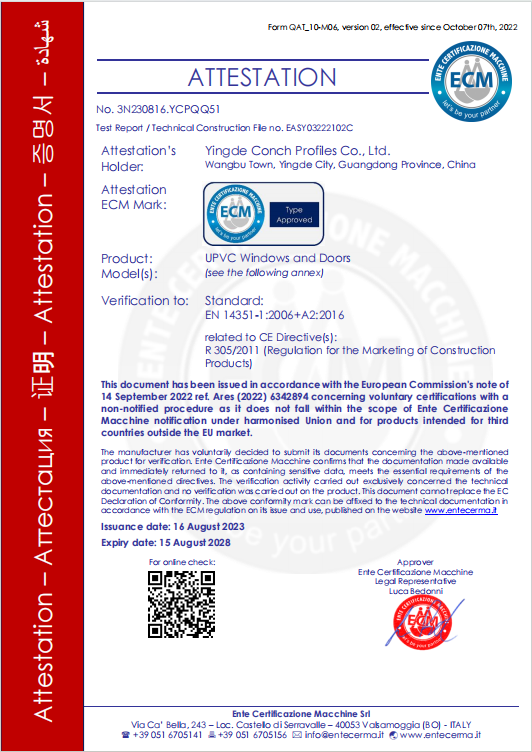
The six series discussed here are the ones named in the ECM attestation held for this manufacturer's UPVC windows and doors. It is a voluntary attestation issued by Ente Certificazione Macchine Srl (ECM), certificate number NO.3N230816.YCPQQ51, issued on 16 August 2023 and valid until 15 August 2028, assessed against EN 14351-1:2006+A2:2016, with a stated scope of "UPVC Windows and Doors, Profiles Series: 50/60/65/80/88/112". The certificate is marked as intended for third countries outside the EU market.
Three points should be read carefully from that scope:
- It is a range, not a ranking. The scope confirms that all six series fall inside the attested window and door scope. It does not say that 112 outperforms 50, or that any series is more suitable for a given project.
- The standard is a whole-window standard. EN 14351-1 is the harmonised product standard for windows and doors; its performance characteristics — wind resistance, water tightness, air permeability, thermal transmittance, acoustic performance — are declared for a finished window configuration, not for a profile in isolation.
- The market note matters. A certificate intended for third countries outside the EU market supports export documentation for those destinations; it should not be presented as an EU-market declaration.
When a certificate copy arrives during evaluation, check the number, the issue and expiry dates, the standard, and whether the specific series and window type on your order fall inside the stated scope. A certificate that covers the series but not the window configuration you are buying is a partial answer.
Matching the series to the window type
The window type usually narrows the series range faster than any other single input, because each operating mechanism consumes depth differently.
Sliding windows
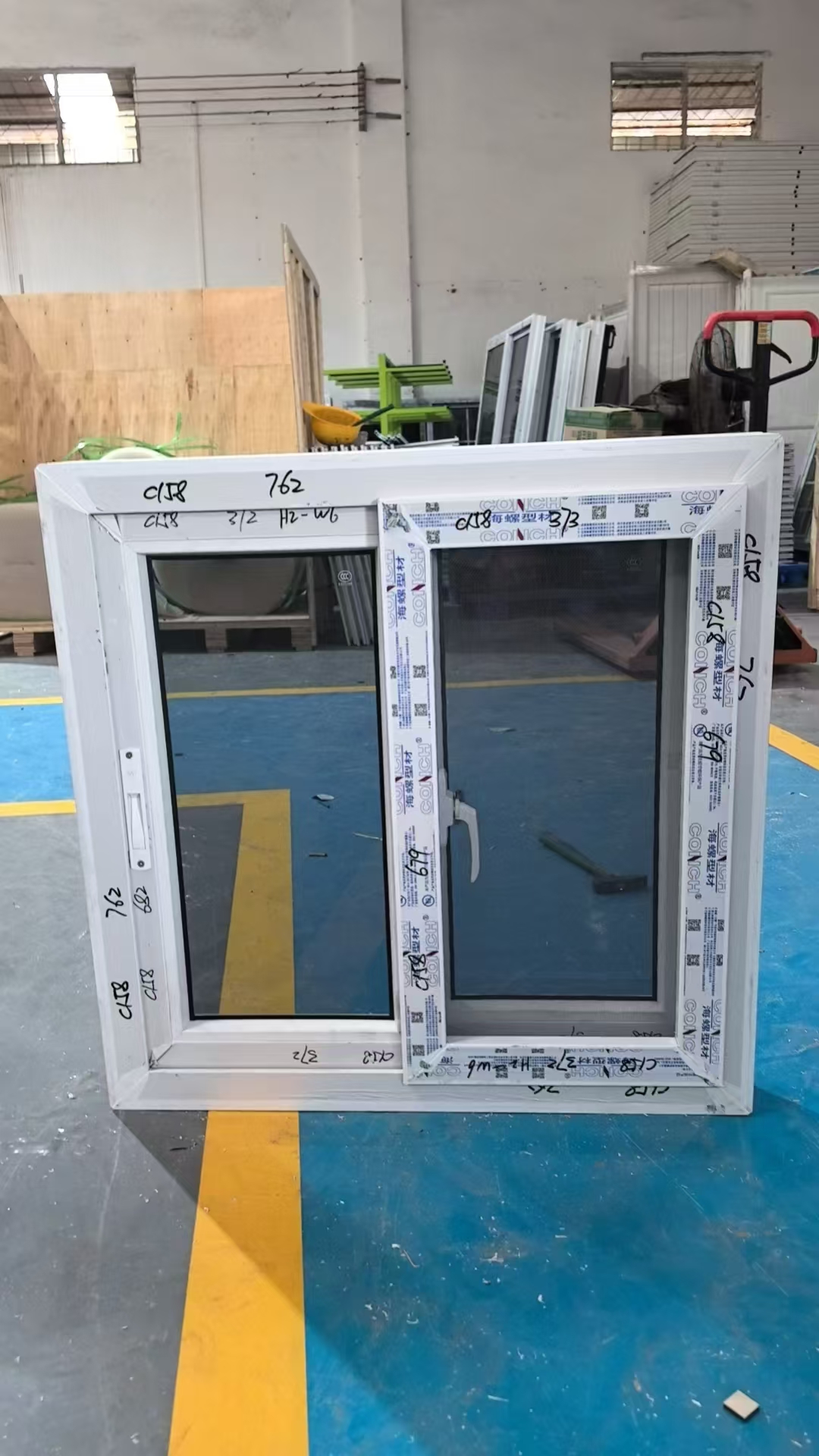
Sliding sashes pass one another, so the frame must accommodate two or more tracks, the sash overlap, rollers and — where specified — an insect screen. That pushes sliding systems toward the deeper end of the range. In this factory's range the 88 series sliding window is supplied with a fly screen, and Conch profiles in 60, 65 and 88 series are offered across the window and door range.
Casement windows
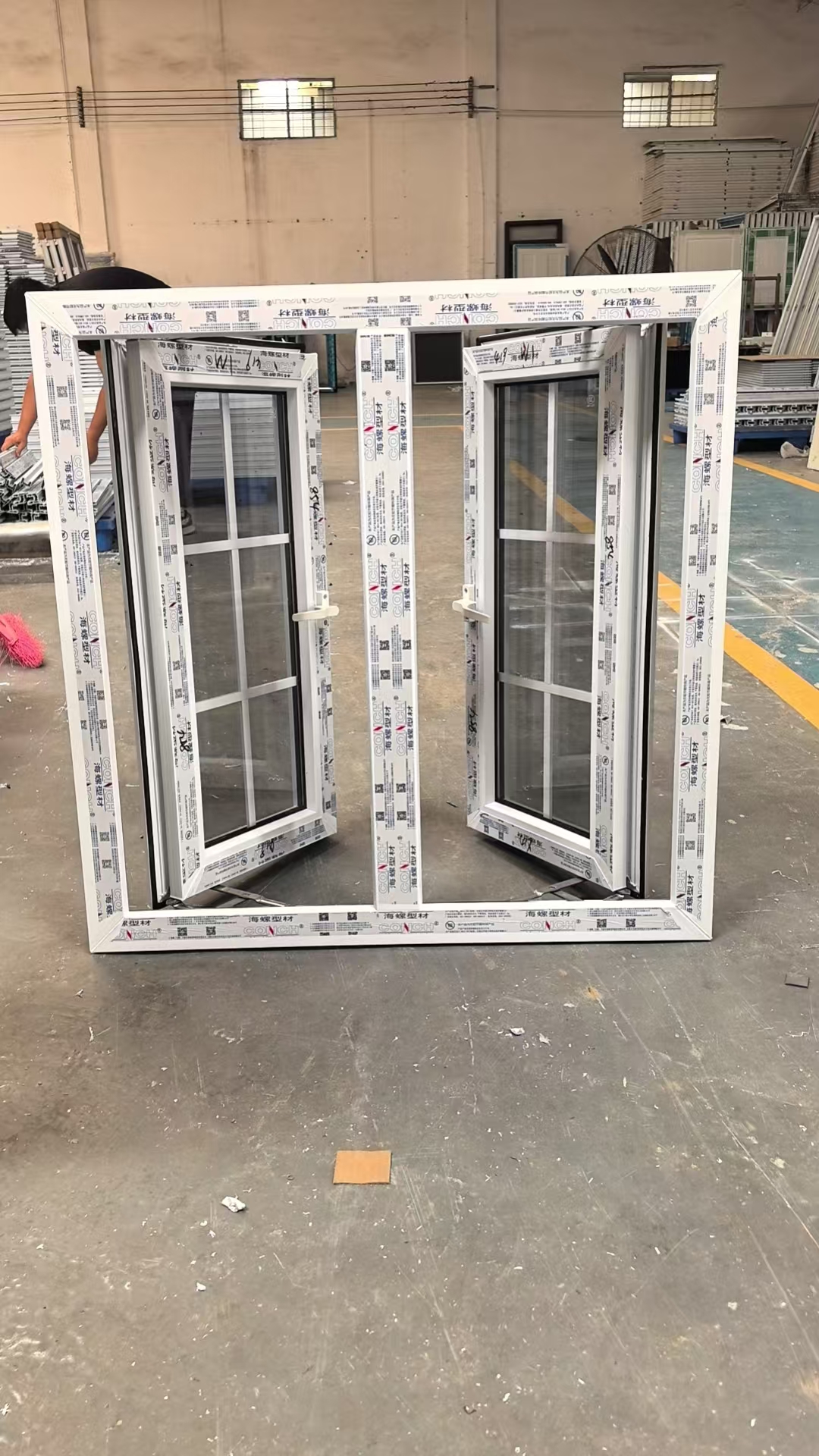
Casement sashes carry the glass on a perimeter frame with hinges on one side, so depth has to house the hinge geometry, the gasket compression zone and the locking points without letting the sash deflect. Mid-range depths are the common territory here. Casement products also remain the most widely used design type — Dataintelo's 2025 market report puts casement windows and doors at the largest product-type share, 38.5% — one reason the 60 and 65 classes are widely tooled.
Tilt-and-turn windows
A tilt-and-turn sash operates on two axes, so tilt arms, corner drives and multipoint locking need more room inside the sash and frame than a simple casement. Combined with the need for consistent gasket compression in both the tilt and the turn position, that is why these builds are usually specified in the same or a deeper class than comparable casements rather than in the shallowest system available.
Awning, hopper and hung windows
Top-hung awning and hopper windows, and American-style hung windows, have their own constraints: friction stays and restrictors for awnings, balances or springs for hung sashes. Each consumes section depth in a specific place, so the profile system has to be checked against the hardware, not only against glass thickness.
| Series (ECM scope) | Nominal depth class | Where the class usually earns its place | What the number still does not tell you |
|---|---|---|---|
| 50 | Shallowest of the six | Smaller, standard-duty openings where glass weight and wind load are modest and the reveal is tight | Wall thickness, reinforcement, gasket quality, glass make-up |
| 60 | Mid-range | Casement, French casement and tilt-and-turn builds for standard residential windows | As above |
| 65 | Mid-range, slightly deeper | Casements and tilt-and-turn with thicker glazing or larger sash sizes | As above |
| 80 | Deep range | Larger sashes and heavier double or triple glazed units; some sliding configurations | As above |
| 88 | Deep range | Sliding systems with multiple tracks and screens; larger spans | As above |
| 112 | Deepest of the six | Large-span and multi-track assemblies where the frame itself must carry more depth | As above |
The table reads each series as a depth class and pairs it with the conditions it is usually specified for. It is a decision aid, not a performance ranking; confirm actual dimensions, wall thickness and chamber layout on the profile drawing for the specific series.
Six steps to selecting a series
- Start with the opening, not the number. Record the reveal depth, opening width and height, number of sashes, storey height and whether an insect screen is required. These are the inputs a fabricator needs before choosing a system.
- Fix the window type. Sliding, casement, tilt-and-turn, awning or hung — each consumes depth in a different place.
- Size the glazing. Decide whether the project needs double or triple glazed units and check that the glazing rebate in the proposed series accepts that unit. Custom glass specification is part of the production scope here, but the unit still has to fit the profile.
- Move to the performance selectors. Ask for profile wall thickness, reinforcement thickness and fixing method, chamber count, gasket material, hardware family and glass make-up. This is where a 60 series offer becomes either a good window or an average one.
- Check whole-window performance, not profile claims. Wind pressure resistance, water tightness, air permeability, thermal transmittance and acoustic performance should be declared for the finished window. As a reference for how whole-window rules work: in England and Wales, Approved Document L sets a limit of 1.4 W/m²K for the whole window in replacement work in existing homes under 2025 guidance. The series number does not appear in that requirement — the U-value of the assembled window does.
- Then confirm supply terms. For this factory: minimum order 30–40 m², typical production lead time 10–30 days, monthly capacity of 4,000 m² of UPVC windows and doors, OEM, ODM and customizable production, pre-shipment inspection by photograph or on-site inspection, FOB or CIF delivery terms, and bank transfer payment.
Sound, heat and water: where the series helps, and where it does not
Sound insulation
Depth contributes mass and chamber structure, and a stiffer frame with well-compressed gaskets holds the acoustic seal more consistently. Airborne sound reduction, however, is dominated by glass make-up and airtightness. A deep series with single glazing will not outperform a properly sealed mid-range window with an asymmetric double glazed unit. No series number converts into a decibel rating; acoustic performance has to be declared for the assembled window, with glass, gaskets and fixing method fixed.
Heat insulation
Multi-chamber sections, warm-edge spacers and gasket compression all reduce heat transfer, and a secondary industry source estimates that modern multi-chamber UPVC profiles can improve energy efficiency by up to 40% compared with traditional frames — an indicative third-party figure, not a value for any specific window build. Continuous steel reinforcement can create a thermal bridge; the remedy belongs to the system design, not to the series number. The declared whole-window U-value is the figure to compare, and the local regulation is the threshold to meet.
Water-tight sealing
Water tightness depends on drainage slots, pressure equalisation, gasket geometry and the overlap between sash and frame, plus installation. A deeper sliding system has more room for a proper overlap and a drainage path, part of why deep sections dominate coastal and high-wind façade work. It remains a declared characteristic of the finished window, and the detail around the reveal, sill and fixings decides whether the declared value survives contact with the building.
OEM, customization and what a series choice means for an order
Profile series choice sits inside the order, not outside it. For a custom residential project the specification conversation typically covers window size, specification detail and glass specification, all of which the manufacturer can customize. OEM and ODM production are both offered for UPVC window and door orders.
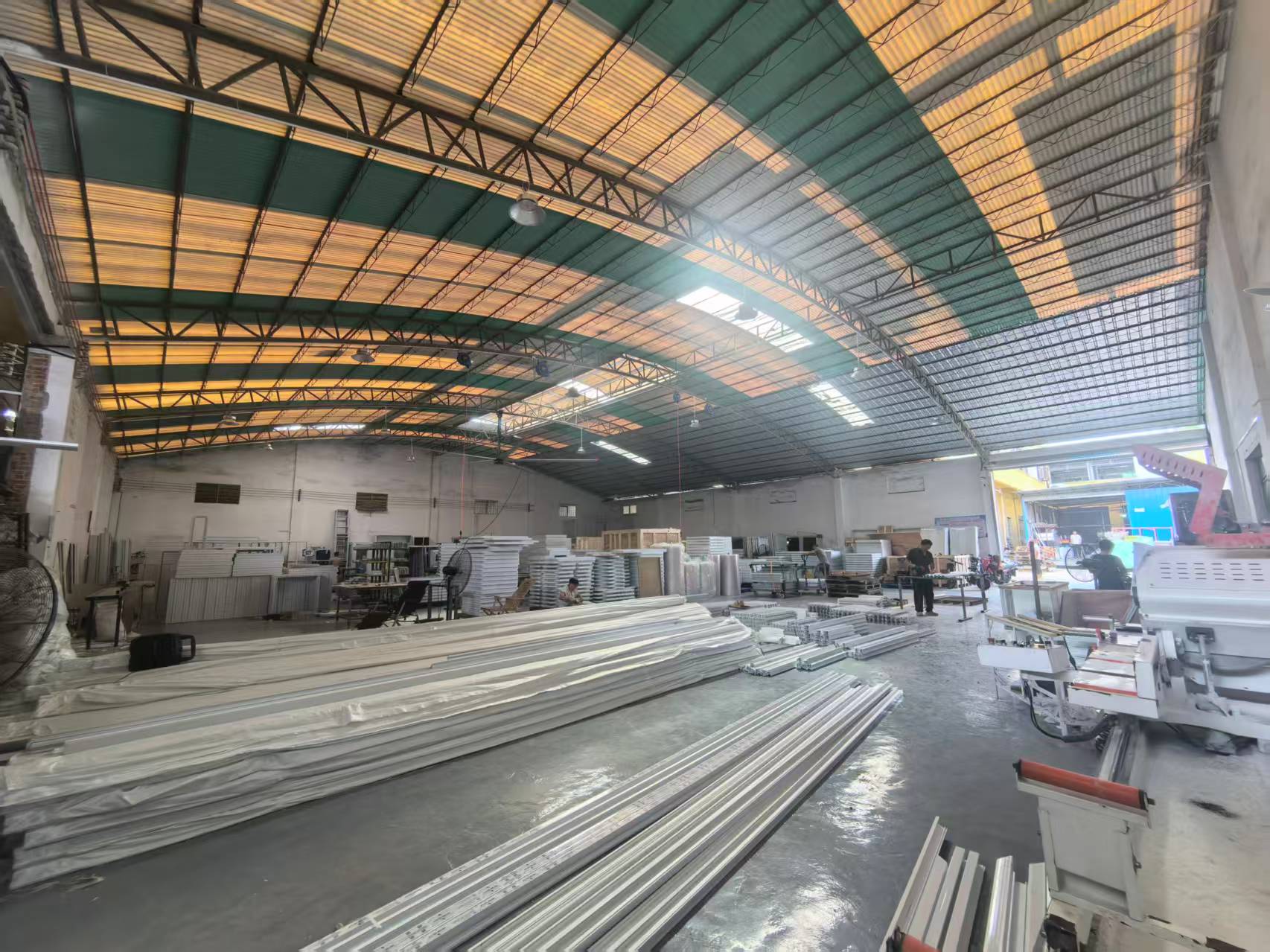
The commercial frame is deliberately narrow: minimum order 30–40 m², typical lead time 10–30 days, monthly capacity 4,000 m², with production covering UPVC sliding windows, casement windows and casement doors. Acceptance can run through pre-shipment photo inspection or on-site inspection, and after-sales support includes technical consultancy and quality testing. For a first order, that structure lets the series and the sample decision be made together: build one window in the intended series and configuration, inspect it against the agreed specification, then release the balance.
A documented project example
The company's project record includes an 800 m² builder project in Kenya for an architectural application, where the recorded result cites strong heat and sound insulation with good energy-saving performance. Listed highlights include high-quality profiles, corrosion-resistant hardware, tempered safety glass, fine workmanship, low-noise sliding operation, water-proof and dust-proof performance and simple maintenance. Such a record shows that the system has been assembled for a comparable climate and use; it does not transfer that outcome to every project, because glass, hardware and installation details differ.
Verification checklist before you confirm a series
- Profile drawing for the exact series: nominal depth, wall thickness, chamber count, reinforcement cavity.
- Reinforcement specification: thickness, coating, and whether it is fitted in every sash and frame member.
- Glazing rebate depth measured against the intended double or triple glazed unit.
- Gasket material and compression detail; corner welding and drainage design.
- Hardware family and locking points appropriate to the window type.
- Certificate copy: number, standard, scope and validity dates, checked against your series and window type.
- Declared whole-window performance for the configuration you are buying, not for a generic model.
- Inspection route and acceptance criteria agreed before production starts.
FAQ
What does the ECM attestation cover for these six profile series?
The ECM attestation, certificate NO.3N230816.YCPQQ51, was issued by Ente Certificazione Macchine Srl on 16 August 2023 and is valid until 15 August 2028, assessed against EN 14351-1:2006+A2:2016. Its scope covers UPVC windows and doors with profiles series 50/60/65/80/88/112, and it is marked as intended for third countries outside the EU market. It confirms that the six series fall inside an attested system scope; it is not a ranking among the series and does not replace the declared performance of a specific window configuration.
What do 50, 60, 65, 80, 88 and 112 mean on a UPVC window profile?
In UPVC window naming, the number is the nominal depth of the profile system, conventionally read in millimetres: a 60 series system is nominally about 60 mm deep, a 112 series about 112 mm. Depth describes how much room the section has for chambers, steel reinforcement, glazing and hardware. It does not describe wall thickness, gasket quality or glass, and it does not determine the finished window's thermal, acoustic or water-tightness performance. Confirm the actual dimension on the supplier's profile drawing.
Which series should I choose for sliding, casement or tilt-and-turn windows?
Match the series to the mechanism first. Sliding windows need room for multiple tracks, sash overlap and rollers — and often a fly screen — so they are typically specified in the deeper classes such as 80, 88 or 112. Casement and tilt-and-turn windows are commonly built in mid-range classes such as 60 and 65, moving deeper as sashes or glazed units get larger. Awning, hopper and hung windows depend on their specific hardware. Final selection should be confirmed against hardware and glazing specification, not the number alone.
Does a higher series number mean better sound or heat insulation?
No. A higher number means more nominal depth, which can allow more chambers, thicker glazing and stiffer reinforcement, but the acoustic and thermal result depends mainly on glass make-up, gasket quality, airtightness, reinforcement continuity and installation. A deep series with single glazing and poor sealing can perform worse than a properly built mid-range window. Compare declared whole-window values, such as U-value and acoustic performance, for the exact configuration you are buying.
China OEM UPVC window manufacturers for custom residential projects: what should a buyer check?
Check four things. First, whether the factory produces the window type and series you need — here, production covers UPVC sliding windows, casement windows and casement doors, with OEM, ODM and customizable production for window size, specification and glass. Second, whether the series falls inside a documented scope, such as an ECM attestation covering series 50/60/65/80/88/112. Third, whether performance is declared for your exact configuration rather than a generic model. Fourth, the commercial frame: minimum order 30–40 m², lead time 10–30 days and monthly capacity of 4,000 m². Matching quoted model codes such as HF60, BR58, WYK75-1 or HF88-L back to the underlying series belongs in the same check.
What are the minimum order quantity, lead time and payment terms?
For this manufacturer, orders start at a minimum of 30–40 m², the typical production lead time is 10 to 30 days, and monthly capacity is 4,000 m² of UPVC windows and doors. Delivery terms are FOB or CIF and payment is by bank transfer. Lead time runs from a confirmed specification, so series, glass and hardware details should be locked before a schedule is committed.
Can I inspect a sample or the production batch before shipment?
Yes. Acceptance can be handled through pre-shipment inspection by photograph or through on-site inspection, and after-sales support includes technical consultancy and quality testing. For a first order, inspecting one window in the intended series and configuration against the agreed specification is the most direct way to confirm wall thickness, reinforcement, gasket detail and hardware before releasing the balance.
Conclusion
The six numbers in this guide map depth classes, not a ladder of quality. 50, 60, 65, 80, 88 and 112 tell you which family of UPVC profile system you are looking at, how much room it offers for chambers, reinforcement, glazing and hardware, and therefore which window types and opening sizes it can serve comfortably. They do not tell you wall thickness, reinforcement, gaskets, glass or installation — and those decide how the window performs in sound, heat and water.
Used that way, the series becomes a shortlist tool. Fix the window type and opening size, choose the depth class that gives the mechanism and the glazing enough room, then spend evaluation time on specification detail and the declared performance of the assembled window. For a custom residential project, one window built and inspected in the intended series tells you more than a catalogue page.
Have Questions or Need More Details?
Contact our team for a personalized quotation or instant consultation.
Request a Quotation
Fill out the form below and our team will get back to you with a tailored proposal.
WhatsApp Direct Chat
Prefer to chat in real-time? Message us on WhatsApp for instant assistance & quick answers.
- Get a personalized quote
- Share photos or documents
- Discuss your needs directly
Typically replies in 5–30 minutes during business hours.