UPVC Windows for Construction Projects: Types, Materials, and How to Evaluate a China Supplier
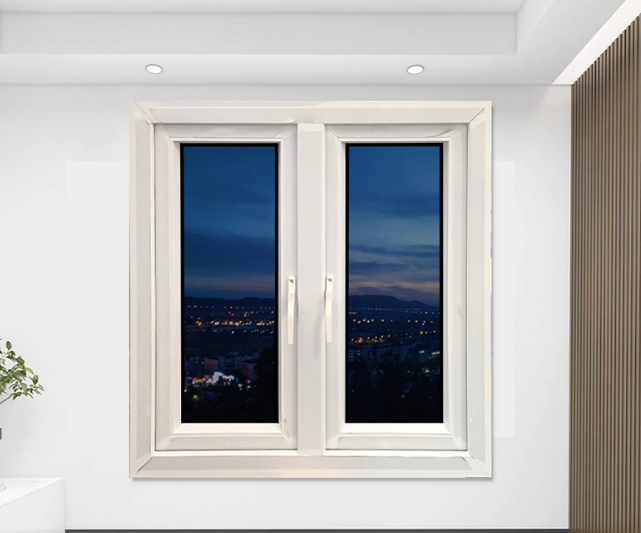
A UPVC window is a window whose frame and sash are extruded from unplasticized polyvinyl chloride (PVC-U) — rigid PVC without plasticizers — instead of timber, aluminium or steel. The profile is normally a hollow, multi-chamber extrusion that can be reinforced with steel, glazed with sealed glass units and operated by mechanical hardware. Because “UPVC window” names a material family rather than one finished product, a project brief that stops at those two words leaves four decisions open: which window type, which profile grade, which glazing and hardware configuration, and which supplier can prove that all three will be delivered as specified.
This guide is written for importers, distributors, procurement managers and project specifiers working at the awareness and research stage of a UPVC window decision. It explains the product, summarises what published market and regulatory data show about the category, sets out a sourcing process, provides comparison tables, and answers five questions that construction buyers usually ask before requesting a sample or a quotation. Manufacturer facts in this article come from Foshan Nanhai Yuanzhaiji UPVC Door & Window Factory; market and regulatory figures are attributed to the named research and standards sources.
The Problem: Why “UPVC Window” Is Not a Complete Specification
The difficulty is not that UPVC windows are complicated to install. It is that one phrase is used for products that behave very differently once they are on a building. Four gaps create most of the confusion for overseas buyers.
- Type gap. A sliding window, a casement window and a tilt-and-turn window all carry the UPVC label, but they use different opening mechanisms, different hardware sets and different sealing designs. Choosing the wrong type for an opening is a design error that no amount of material quality will correct.
- Profile gap. UPVC profiles are extruded, not cast, and their performance depends on formulation and wall thickness. Brand-grade profiles such as Conch are produced with a stable raw-material formula and strict wall-thickness standards, while general mid-range profiles vary considerably between manufacturers; some reduce formulation or wall thickness in order to reach a lower purchase price. The visible difference on delivery day is small. The difference after years of ultraviolet exposure and temperature cycling is not.
- Performance gap. Thermal, acoustic and weather performance are set by the whole assembly — profile, chamber design, glazing and gaskets — and are judged against rules that differ by market. In England and Wales, the legal whole-window U-value limit for window replacement in existing homes was 1.4 W/m²K in 2025 under Approved Document L. A supplier that cannot map its standard build-up to a stated requirement leaves the buyer to test performance on site.
- Verification gap. Most overseas buyers never see the factory. Without documents, samples or traceable production facts, a quotation is an assertion rather than evidence.
The practical answer is to convert the brief from a material request into a four-part specification — type, profile grade, performance target and evidence — and then to source against that specification.
Industry Background: Scale, Structure and Constraints
Published market data confirms that UPVC windows are a mainstream building product rather than a niche one. Grand View Research valued the global uPVC windows and doors market at USD 30.8 billion in 2025, while Mordor Intelligence, using a different methodology, estimates USD 42.15 billion for the same year. The gap between the two figures is a useful caution: market-sizing numbers depend heavily on what is counted, and they should be read as scale indicators rather than as procurement references.
The same body of research describes where demand sits. Asia Pacific accounted for 44.1% of global uPVC window and door revenue in 2025 (Grand View Research). Within the global product mix, windows took 58.0% of total uPVC product revenue, and casement windows and doors were the largest single design type at 38.5% (Dataintelo). For a project specifier, that distribution explains why casement and sliding systems dominate the catalogues of Asian manufacturers, and why specialist types such as tilt-and-turn, awning and hung windows usually need to be confirmed as explicit line items rather than assumed.
Regulation is the second structural force in this category. National building rules increasingly set numeric performance floors rather than general expectations, and they differ from market to market. The United Kingdom is one example: the legal whole-window U-value limit for replacement windows in existing homes in England and Wales was 1.4 W/m²K in 2025 under Approved Document L. Other markets apply their own limits on thermal transmittance, air permeability and water tightness. The sourcing consequence is straightforward — a supplier’s ability to build to a stated U-value or watertightness target, with a documented profile, glazing and gasket combination, is worth more than a general claim of energy efficiency.
Supply is geographically concentrated. Foshan Nanhai in Guangdong is a key manufacturing base for UPVC profiles and windows, and industry reporting estimates lifespans of 30 to 40 years for high-quality profiles produced in that cluster. That figure describes the material under favourable conditions; actual window life also depends on installation, hardware and exposure, which is why lifespan estimates are best treated as a ceiling rather than a guarantee.
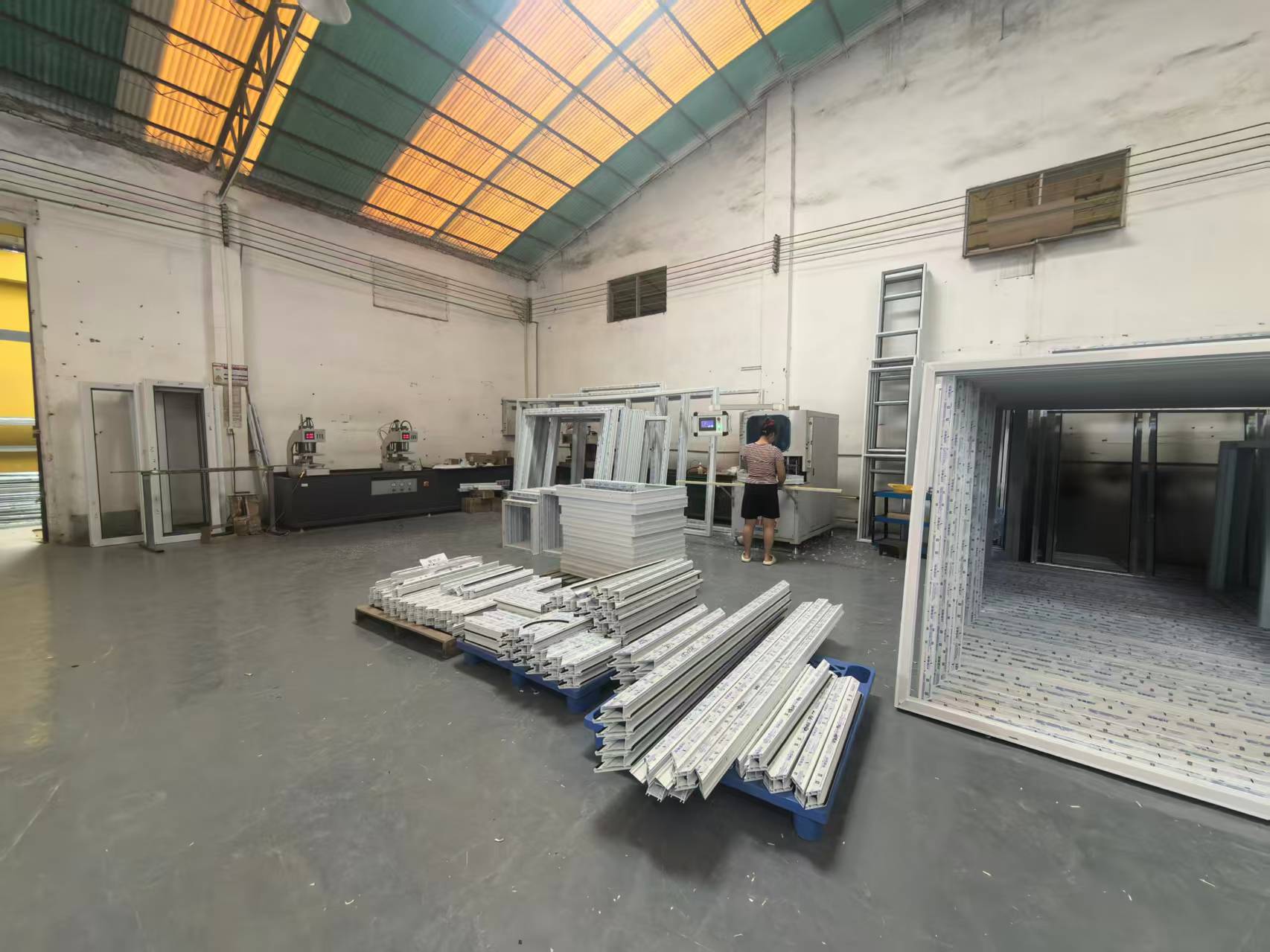
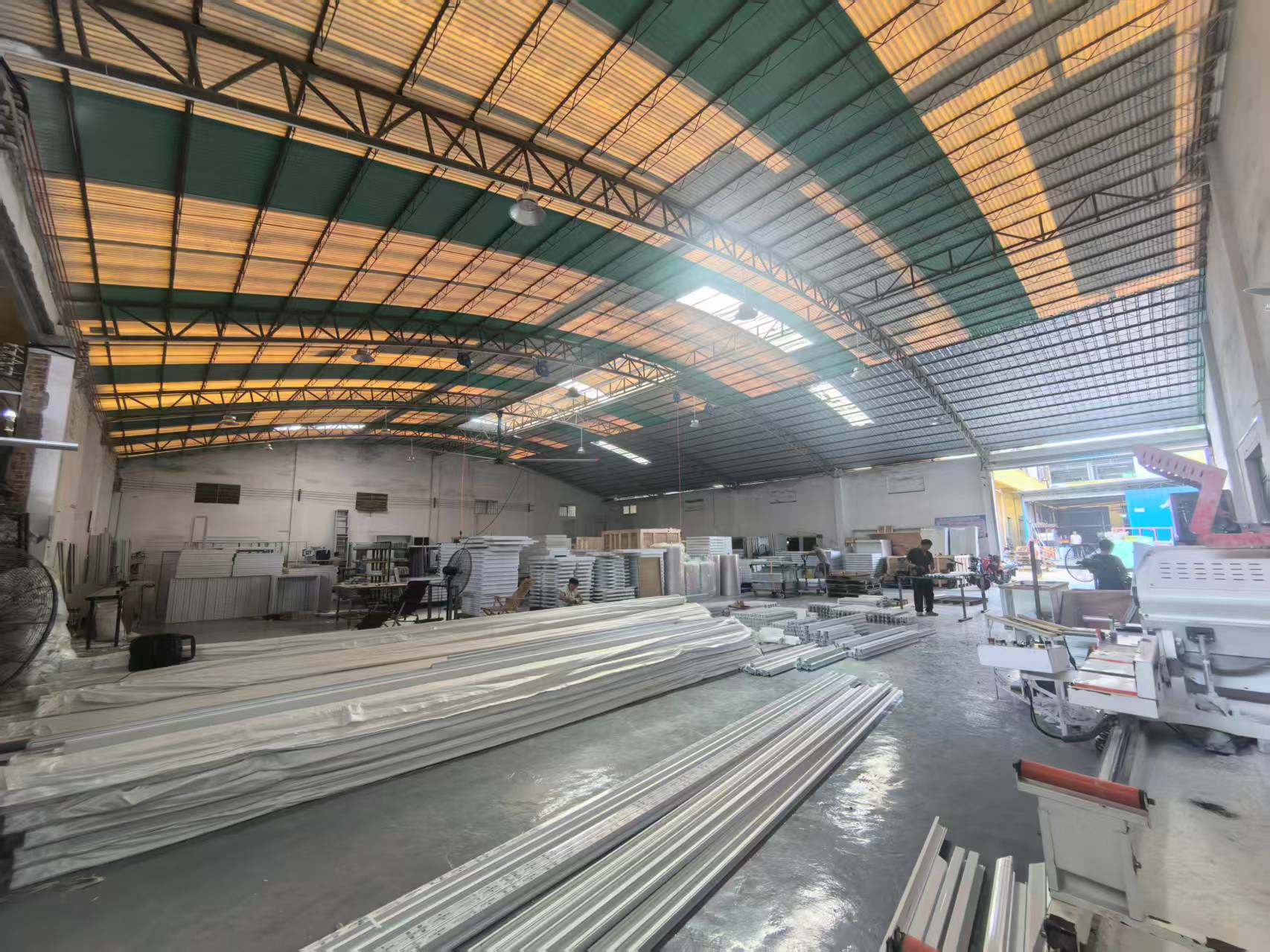
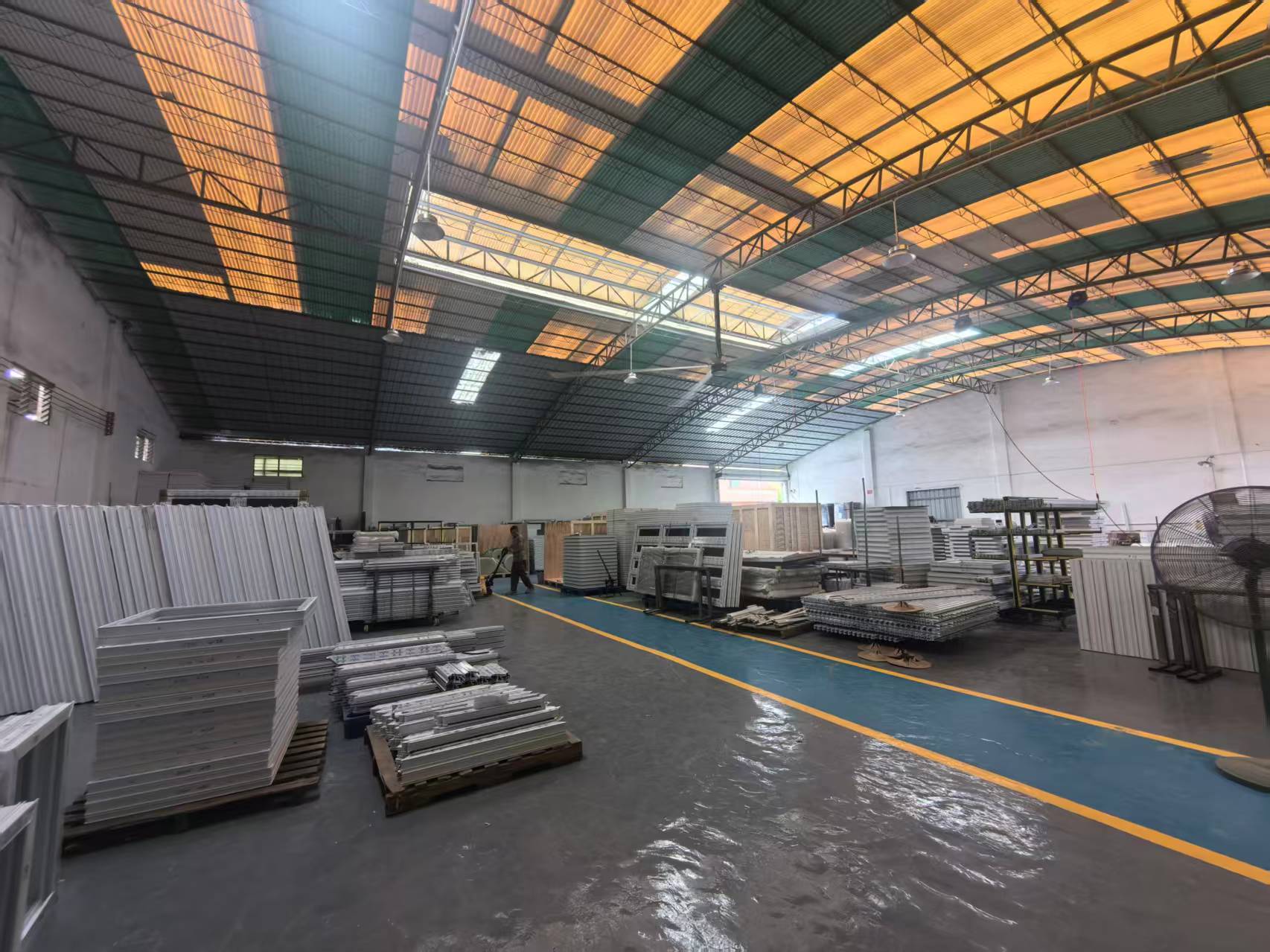
Foshan Nanhai Yuanzhaiji UPVC Door & Window Factory is a UPVC door and window manufacturer established in 2009, with over 15 years of experience in the category. The factory covers 3,000 square meters, employs approximately 20 staff including an R&D team of 10 engineers, and reports an annual production capacity of 50,000 units. Around 80% of output is exported to LATAM, MENA, ASEAN and EU markets. The range covers UPVC sliding windows, UPVC casement windows, UPVC tilt-and-turn windows, crank awning windows, American-style hung windows, awning windows, hopper windows, insect screens, UPVC louver windows and insulated glass louver windows, plus UPVC sliding doors, lift-and-slide doors and hinged doors.
What a UPVC Window Is Made Of
A finished UPVC window is an assembly of five elements: the extruded profile, any internal steel reinforcement, the glazing unit, the sealing system and the operating hardware. Performance claims that do not specify all five are incomplete.
The profile and its reinforcement
The frame and sash begin as extruded unplasticized polyvinyl chloride profiles. The hollow, multi-chamber cross-section is not cosmetic: the air trapped in those chambers contributes to thermal insulation, and the chambers also allow reinforcing steel to be inserted inside the profile to increase the mechanical strength of the finished window. Profile systems are usually named by series number, which refers to the profile depth.
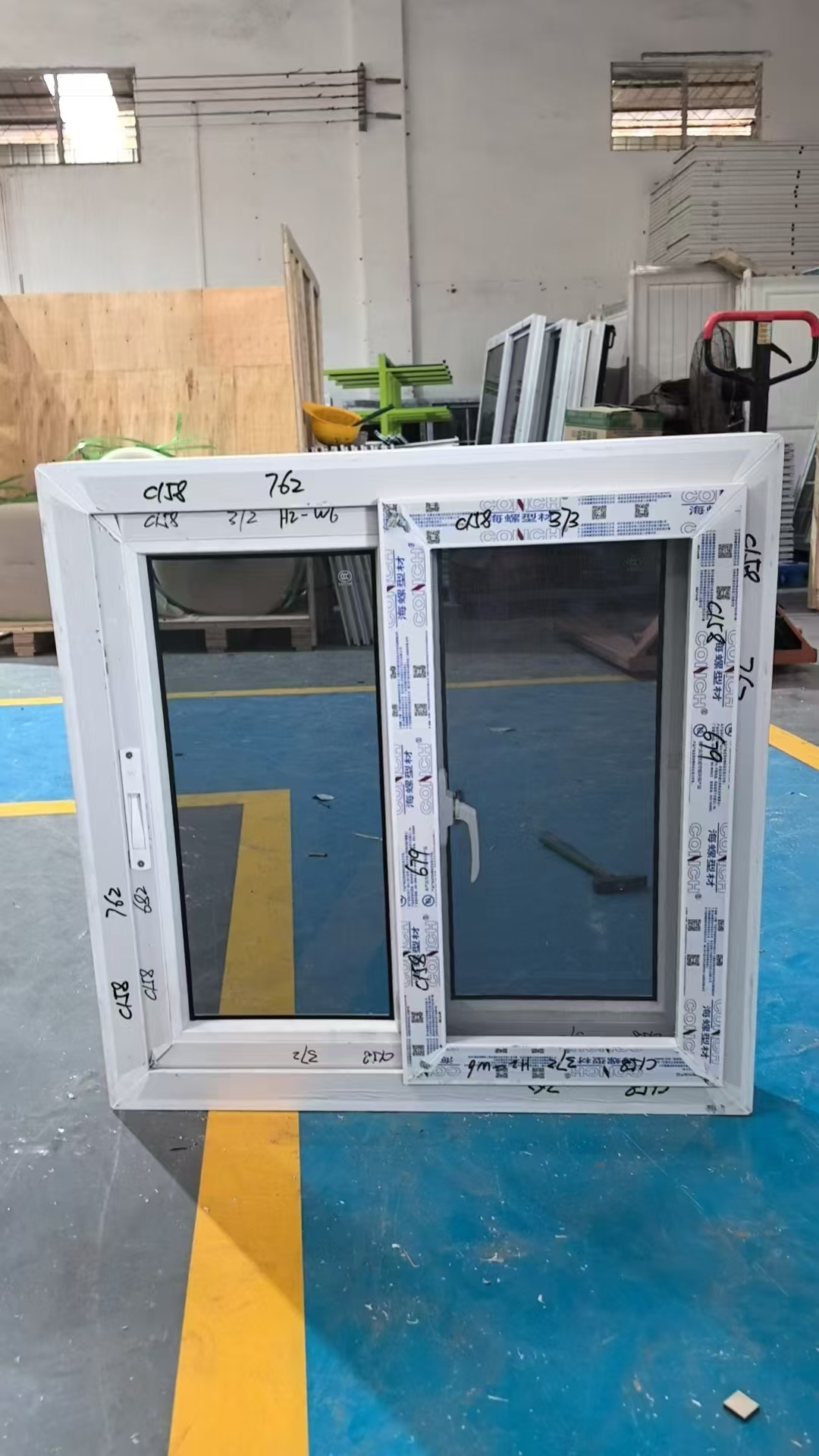
Yuanzhaiji supplies Conch profiles long-term in the 60, 65 and 88 series and offers co-extruded colour, laminated wood-grain finishes and solid colours including dark grey and black. The series, colour finish and reinforcement determine both the appearance of the elevation and how the window behaves under wind load, so they belong in the written configuration list.
Profile quality itself is governed by GB/T 8814-2017, the standard for unplasticized polyvinyl chloride (PVC-U) profiles for doors and windows, which sets requirements on wall thickness, impact resistance, heat stability and anti-aging performance, and expects qualified test reports to verify physical properties. The table below records the published material parameters for the UPVC window models BR58 and HF88.
| Material parameter | Value | What it describes |
|---|---|---|
| Material | UPVC (PVC-U) | Unplasticized rigid PVC compound used for the frame and sash profile |
| Vicat softening point | 86 °C | Heat resistance of the compound before softening |
| Flexural modulus of elasticity | 2,840 MPa | Stiffness of the profile under bending load |
| Tensile yield stress | 43 MPa | Tensile strength at the yield point |
| Tensile strain at break | 186% | Elongation before break, indicating impact tolerance rather than brittleness |
| Density | 1,520 kg/m³ | Density of the profile compound |
Note on reading these figures: they are material properties of the profile compound, not a finished-window performance rating. U-value, sound reduction and water tightness have to be assessed for the complete window, including glazing, gaskets and installation.
Glazing options
Glass is the largest surface of any window and a major determinant of thermal and acoustic performance. Yuanzhaiji offers single-layer glass, double-glazed insulated glass, tempered safety glass and frosted glass, and these options are specified separately from the frame. A double glazed UPVC window is the usual baseline where a project has a thermal or acoustic target, while tempered glass is specified where safety glass is required and frosted glass where privacy matters.
Triple glazing appears in markets where national U-value rules demand additional glass layers. Because frame depth, spacer and cavity all change with the glass package, the glazing build-up should be confirmed in writing rather than assumed from the words “double glazed”.
Hardware and sealing systems
Operation and long-term weather tightness are decided by hardware and gaskets: window handle, window hinge, lock point, multipoint lock drive mechanism, crescent lock, window roller, EPDM sealing gasket and pile weather strip. These are the components that move thousands of times over a window’s life, and they are also the components most often omitted from a low-detail quotation.
Field experience reported in UPVC window knowledge material describes a typical complaint — a sash that is stiff and difficult to open or close — as having three common causes: debris or dust accumulated in the sliding track, a worn or out-of-position pulley, or misadjusted sash hardware. The remedy is maintenance rather than replacement: clean the track, check the pulley and replace it if worn, then adjust the hinge or roller screw to level the sash. For a project, that translates into a sourcing rule: specify serviceable hardware and confirm that replacement rollers, gaskets and lock components are available, because operating cost over years matters more than a small difference in purchase price.
The window types in a UPVC range
A complete UPVC range covers different opening principles, not just different sizes: UPVC sliding windows, casement windows, tilt-and-turn windows, crank awning windows, American-style hung windows, awning windows, hopper windows, fully-opening windows, insect screens, UPVC louver windows and insulated glass louver windows. UPVC doors follow the same logic, with sliding, lift-and-slide and hinged door series available. The comparison table later in this guide sets out how the main types differ in operation and typical fit.
Performance requirements to specify
Project specifications for UPVC windows normally include, at minimum: wind-pressure resistance; water tightness; air permeability; sound and heat insulation; UV resistance and anti-aging behaviour; optional fire resistance where the project requires it; and compliance with local building codes. The operating mode — manual opening and closing, tilt-and-turn opening or sliding operation — should be stated alongside them, because hardware and sealing details change with the mechanism.
Step-by-Step: How to Specify and Source UPVC Windows for a Project
The sequence below is written for a buyer moving from awareness into a sourcing decision. Each step produces a document that the next step depends on.
- Define the openings and the environment. Record the project type (residential building, commercial building, renovation project or villa project) and the working conditions. Outdoor installation in coastal high-humidity, strong-wind areas is one of the hardest conditions, and it is where corrosion resistance and wind-pressure resistance move to the top of the requirement list.
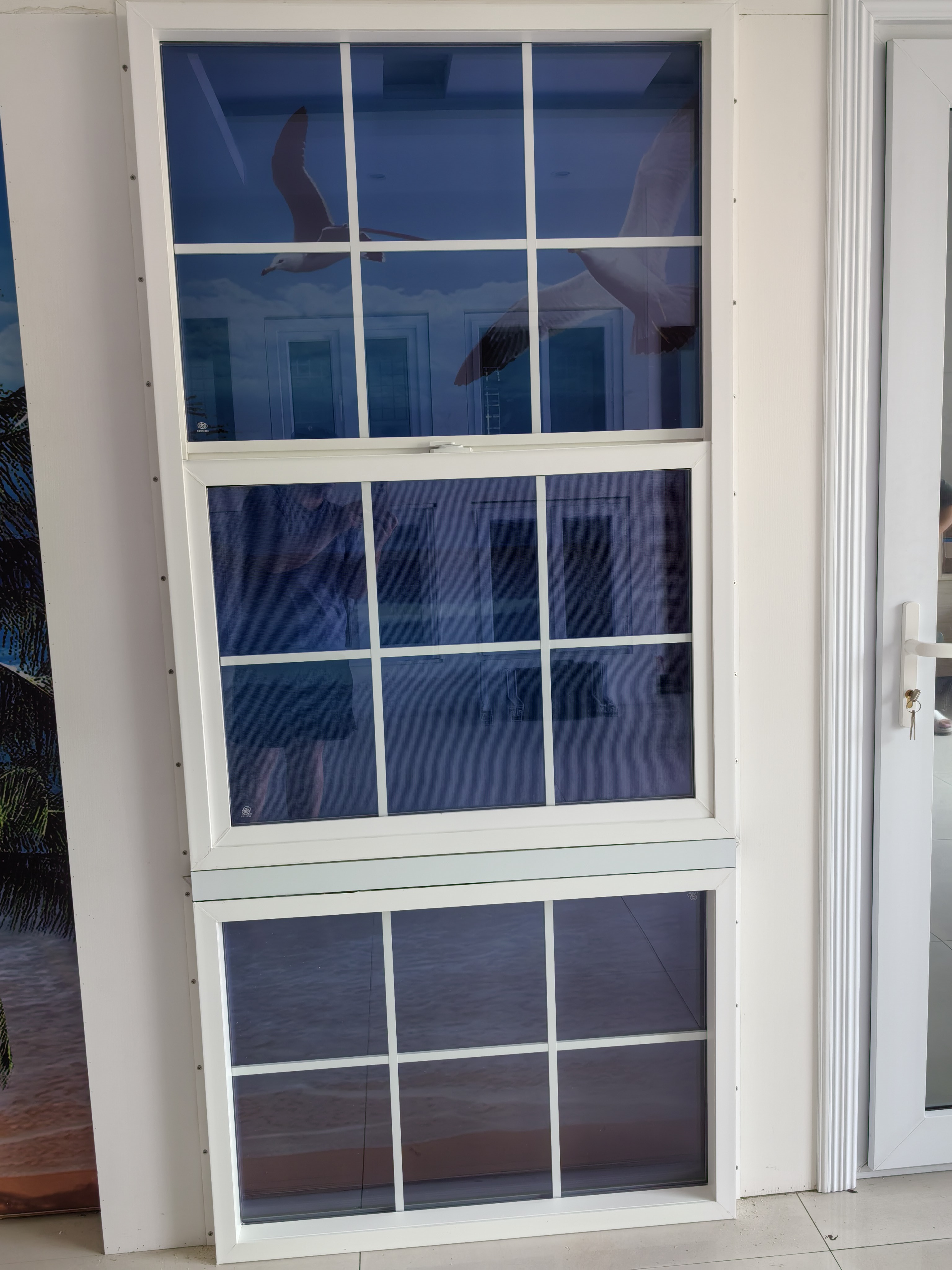
- Choose the window type for each opening. Sliding operation suits wide openings; tilt-and-turn opening provides dual-mode ventilation and cleaning access; casement and crank-operated awning types cover side-hung and top-hung openings; American-style hung windows suit vertical sash elevations. Fix the type before discussing price, because the type determines the hardware and profile set.
- Set the performance target from the destination market. Translate local rules into numbers on paper — U-value, water tightness, air permeability, wind load — and require the supplier to state the build-up that meets them. Where a market applies a legal limit, such as the 1.4 W/m²K whole-window limit that applied in England and Wales in 2025 under Approved Document L, it belongs in the enquiry rather than in a later dispute.
- Decide the profile grade and verify it. Brand-grade Conch profiles use a stable raw-material formula, consistent wall thickness and reliable UV and anti-aging performance, at a higher unit material cost. General mid-range profiles cost less but vary in quality. Whichever grade is chosen, request wall-thickness data and test reports against GB/T 8814-2017, and when Conch is specified, confirm the genuine supply channel to avoid counterfeit profiles.
- Lock the glazing and hardware schedule. List glass type, hardware set, gaskets and weatherstrip line by line. Insect screens matter in humid, insect-heavy markets; multipoint locking matters where security is a project requirement; louver and insulated glass louver windows suit spaces that need ventilation with privacy.
- Validate with samples and documents. Inspect incoming profiles for wall thickness, appearance and test reports; check cutting precision and notch size during processing; verify sash clearance, sealing and opening and closing smoothness during assembly and installation; then inspect finished units for air leakage, deformation and poor sealing. A sample window plus a certificate pack answers most of the questions a catalogue cannot — Yuanzhaiji states that it can provide CE, ISO and other qualification certificates as required, and operates a sample showroom for one-stop purchasing.
- Confirm quantity, scheduling and delivery. Match the order to the supplier’s stated capacity — 50,000 units per year for Yuanzhaiji, produced by a workforce of approximately 20 staff and an R&D team of 10 engineers. The factory states that it works to reliable quality, reasonable pricing and on-time delivery; buyers should nonetheless put the delivery milestone for each construction phase in writing, together with packaging and destination details.
Use Cases: Where UPVC Windows Are Specified
Coastal high-humidity, high-wind projects
Outdoor installation in coastal, high-humidity and strong-wind areas is one of the hardest conditions for any window. The requirement set for these projects combines wind-pressure resistance, water tightness and air permeability with corrosion resistance, UV resistance and anti-aging performance. The last two are the reason profile formulation — not frame geometry alone — decides how a window looks after years of sun exposure.
Residential buildings and villa projects
Residential and villa work usually centres on thermal insulation, sound insulation, sealing performance and appearance. Crank-operated French casement and standard casement types are used where a traditional elevation is wanted; American-style hung windows suit vertical-sash residential design; tilt-and-turn windows are common where ventilation control and safe cleaning access both matter. Renovation projects in occupied homes also make the profile-grade question concrete, because a replacement window that fails early costs more than the original price difference between grades.
Commercial buildings and renovation projects
In commercial buildings and renovation work, the constraint is often continuity: matching existing opening sizes, keeping the same operation mode and fitting the work around an occupied building. This is also where documentation requirements are heaviest, because the client or the authority may require test reports, certificates and stated performance values for the delivered windows, not only for the profile.
Export-market considerations
Yuanzhaiji exports roughly 80% of its output to LATAM, MENA, ASEAN and EU markets, which means the same window family is supplied against several different national rules. Buyers in these regions should confirm the specific performance documentation required at destination before production begins, since certification expectations are not identical between the EU and other markets.
Comparison: Window Types and Profile Grades
Two comparisons matter most at the research stage: which window type suits which opening, and which profile grade suits which project. Both tables use the facts described earlier in this article.
| UPVC window type | Opening mechanism | Typical fit | Range reference |
|---|---|---|---|
| Sliding window | Horizontal sliding operation on rollers | Wide openings and elevations where a swinging sash is not wanted | 60-series and 88-series sliding windows; 88-series available with fly screen |
| Casement window | Side-hung sash operated manually by handle | The largest single design type by global revenue share (38.5%, Dataintelo, 2025); general residential and commercial elevations | 60-series casement window; crank-operated French casement option |
| Tilt-and-turn window | Dual mode — tilt for partial opening, turn for full opening | Rooms that need controlled ventilation plus full access for cleaning | Included in the UPVC window range |
| Crank awning window | Top-hung sash operated by a crank | Controlled ventilation openings on facades | Included in the UPVC window range |
| American-style hung window | Vertical sash movement | Vertical-sash residential elevations | 82-series American-style single hung window |
| Hopper window | Bottom-hung, top-opening sash | Secondary ventilation openings | Included in the UPVC window range |
| Comparison criterion | Brand-grade Conch UPVC profiles | General mid-range UPVC profiles |
|---|---|---|
| Raw-material formulation | Stable, standardized formulation | Varies greatly between manufacturers |
| Wall thickness | Strict wall-thickness standards | Inconsistent; some suppliers reduce wall thickness to lower the purchase price |
| UV resistance and anti-aging | Reliable UV resistance and anti-aging capability | Uneven; insufficient anti-aging additives can lead to yellowing and brittleness |
| Unit material cost | Higher | Lower |
| Long-term risk | Longer service life and fewer later-stage problems when processing and installation are proper | Risk of yellowing, deformation and air leakage after several years; counterfeit brand profiles carry the same risk |
| Recommended use | Projects prioritizing long-term durability, especially home renovation | Budget-constrained projects, with strict verification of wall thickness, formulation and workmanship |
Decision rule: neither column is automatically the right choice. Where a window faces long-term outdoor exposure, UV load or a project in which callbacks are expensive, the profile-grade decision is a maintenance and risk decision rather than a price decision.
Frequently Asked Questions: China UPVC Window Suppliers for Construction Projects
1. What standards and certificates should a China UPVC window supplier for construction projects be able to provide?
At profile level, the reference standard is GB/T 8814-2017, which covers unplasticized polyvinyl chloride (PVC-U) profiles for doors and windows and sets requirements on wall thickness, impact resistance, heat stability and anti-aging performance; qualified test reports should be available to verify the physical properties. At document level, Foshan Nanhai Yuanzhaiji UPVC Door & Window Factory states that it can provide CE, ISO and other qualification certificates as required. At project level, the supplier should be able to map its window build-up to the destination market’s rules — for example the 1.4 W/m²K whole-window U-value limit that applied to window replacement in existing homes in England and Wales in 2025 under Approved Document L — as well as to the project’s stated wind-pressure resistance, water tightness and air permeability requirements.
2. Can a China UPVC window supplier customise window types, colours and glazing for a construction project?
Yes, within the limits of the profile system specified. The Yuanzhaiji range covers UPVC sliding windows, casement windows, tilt-and-turn windows, crank awning windows, American-style hung windows, awning windows, hopper windows, insect screens, UPVC louver windows and insulated glass louver windows, and the factory supplies Conch profiles long-term in the 60, 65 and 88 series with co-extruded colour, laminated wood-grain finishes and solid colours such as dark grey and black. Glazing can be specified as single-layer glass, double-glazed insulated glass, tempered safety glass or frosted glass, and hardware is matched to the opening mode — handle, hinge, lock point, multipoint lock drive mechanism, crescent lock, roller, EPDM sealing gasket and pile weather strip. Customisation should always be confirmed as a written configuration list covering profile series, glazing build-up, hardware and colour finish before production starts.
3. What drives the cost of UPVC windows from a China supplier, and how should a project budget be built?
Quoted prices depend on window size and quantity, profile grade, glazing configuration, hardware, colour finish and documentation requirements, so no general price can be stated here. The decision that most often changes total cost is profile grade: brand-grade Conch profiles carry a higher unit material cost but a stable formulation, consistent wall thickness and reliable anti-aging performance, while general mid-range profiles cost less and vary in quality between manufacturers — poor formulations or thin walls can cause yellowing, deformation and air leakage after several years. The appropriate comparison is therefore not purchase price against purchase price, but purchase price plus expected maintenance and replacement risk. The practical approach is to build the budget from a line-item enquiry — type, size, quantity, glazing, hardware and destination — and to request pricing with the profile grade stated explicitly.
4. Can I inspect a UPVC window sample before placing a project order?
A sample showroom is available at Yuanzhaiji for one-stop purchasing, and sample validation is the most reliable way to check the two things a document cannot fully convey: profile wall thickness and appearance, and the feel of the hardware. During inspection, check the profiles against their test reports, examine cutting precision and notch quality, test sash clearance, sealing and opening and closing smoothness, then inspect finished units for air leakage, deformation and poor sealing. Sample configuration and dispatch arrangements depend on the window type, colour and glazing chosen, so these details should be agreed directly with the supplier before dispatch.
5. What production capacity and delivery commitments should I expect from a China UPVC window supplier?
Yuanzhaiji reports an annual production capacity of 50,000 units, a workforce of approximately 20 staff including an R&D team of 10 engineers, and states that it works to reliable quality, reasonable pricing and on-time delivery. Because capacity is shared across orders and because glazing, colour and hardware configuration change the production flow, the schedule for a specific project should be confirmed in writing against the actual window schedule. The most useful next step is to send your window schedule — types, sizes, quantity, profile grade, glazing and destination market — and request both a quotation and a sample plan; Yuanzhaiji can be reached at 1803877678@qq.com or +86 130-0674-7018, or through yuanzhaiji.com.
Conclusion and Next Step
A UPVC window is a material family, and a construction project needs a specification. Four elements close the gap: the window type that matches each opening and operating mode; the profile grade that matches the exposure and the client’s tolerance for later problems; the glazing and hardware configuration that delivers the required thermal, acoustic and weather performance; and the evidence — wall-thickness data, test reports against GB/T 8814-2017, certificates and samples — that shows the supplier can deliver what was specified. Published data supports the scale of the category: a global uPVC windows and doors market valued at USD 30.8 billion in 2025 by Grand View Research, with Asia Pacific holding 44.1% of revenue and casement windows and doors the largest design type at 38.5%.
Foshan Nanhai Yuanzhaiji UPVC Door & Window Factory has manufactured UPVC doors and windows since 2009, operates a 3,000 m² facility with approximately 20 staff and an R&D team of 10 engineers, reports an annual capacity of 50,000 units, and exports about 80% of production to LATAM, MENA, ASEAN and EU markets. Buyers can use that base of facts — not a claim of superiority — as the starting point for their own evaluation.
Request a UPVC window sample or a project quotation
Send your window schedule — type, size, quantity, profile grade, glazing and destination market — and ask for a configuration list, sample plan and quotation.
Website: yuanzhaiji.com | Email: 1803877678@qq.com | Tel / WhatsApp: +86 130-0674-7018
WhatsApp: Start a WhatsApp conversation
Factory address: Xilin Industrial District, Honglai Town, Quanzhou Nan’an City, Fujian Province, China
Have Questions or Need More Details?
Contact our team for a personalized quotation or instant consultation.
Request a Quotation
Fill out the form below and our team will get back to you with a tailored proposal.
WhatsApp Direct Chat
Prefer to chat in real-time? Message us on WhatsApp for instant assistance & quick answers.
- Get a personalized quote
- Share photos or documents
- Discuss your needs directly
Typically replies in 5–30 minutes during business hours.