Specifying Wind-Pressure Resistance and Water Tightness in UPVC Windows: A Technical Guide
Wind-pressure resistance, water tightness and air permeability decide whether a UPVC window holds up on an exposed facade, and they are usually the three clauses missing from a buyer's specification. The parameters can be written down, tested and verified. The components that deliver them can be named. The supplier can be asked to confirm both before production starts.
This guide covers what each parameter means in engineering terms, which parts of the window control it, including window rollers, EPDM sealing gaskets, pile weather strips, window handles, hinges and lock points, and how to turn a project brief into a specification package that can actually be inspected. Product 8037, the UPVC Window supplied in models BR58 and HF88 by Foshan Nanhai Yuanzhaiji UPVC Door & Window Factory, is the worked example, because its stated special requirements include wind-pressure resistance, sound and heat insulation, and water tightness for coastal high-humidity areas.
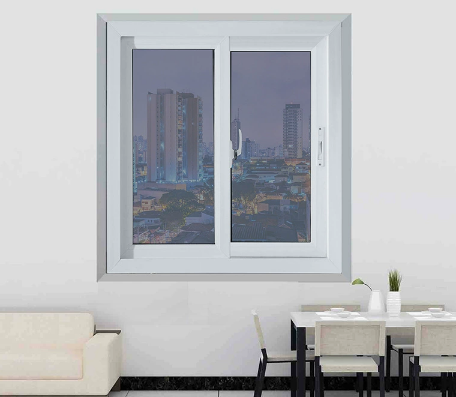
At a glance
- Write three envelope parameters with a standard reference and a target class: wind-pressure resistance, water tightness, air permeability.
- Specify the profile system, reinforcement and glass build-up that make those classes achievable.
- Name the hardware and sealing components (rollers, EPDM gaskets, pile weather strips, handles, hinges, lock points) instead of describing them as accessories.
- Require evidence before shipment: quality inspection report plus the certificate set that applies to the destination market.
- Match the class to the exposure. Coastal high-humidity and strong-wind conditions are a different specification from a sheltered inland facade.
Problem Definition: Why 'Weatherproof' Cannot Be Inspected
A specification that says 'waterproof UPVC window' or 'good sealing performance' transfers no measurable obligation to anyone. It cannot be quoted precisely, cannot be checked at the factory gate and cannot be tested on site, because there is nothing to test against. The supplier builds to its own default, which may be entirely reasonable, or may be calibrated for an inland sheltered facade rather than for coastal high-humidity and strong-wind conditions.
The four performance parameters that need separate clauses do not do the same job:
- Wind-pressure resistance is structural. It describes how the frame, sash and glass resist positive and negative pressure without permanent deformation, loss of operation, or a seal line that opens under load.
- Water tightness is hydraulic. It describes how the window resists water penetration under a defined pressure difference, which depends on drainage paths, gasket compression, welded corner joints and glazing seals.
- Air permeability is a sealing-continuity property. It measures how much air passes through the closed window at a given pressure difference, and it feeds directly into heat loss and noise transmission.
- Sound and heat insulation are system outcomes. They combine glass build-up, chamber geometry, seal continuity, hardware compression and installation quality.
When those clauses are absent, the failure pattern is predictable: driving-rain leakage at the interlock or sill; draughts and whistling after the first heating or cooling season; sash deflection on upper floors; hardware that binds as gaskets take a permanent set. On coastal sites, salt-laden humid air adds a second track of failure, corrosion and aging, which is why UV resistance and anti-aging performance belong in the same clause set as wind, water and air.
Industry Background: Standards, Market and the Coastal Constraint
Two things frame this specification work in 2026: a market large enough to support specialised coastal products, and a regulatory environment that increasingly converts performance language into legal limits.
The global uPVC windows and doors market was valued at USD 30.8 billion in 2025 by Grand View Research, while Mordor Intelligence estimates USD 42.15 billion for the same year. The gap reflects differences in methodology and in which accessory and hardware segments are counted, so market size is best treated as a range rather than a precise figure. Within that market, Asia Pacific held a 44.1% revenue share in 2025, and windows accounted for 58.0% of product revenue. Casement windows and doors were the largest design type at a 38.5% share.
Manufacturing concentration matters for sourcing. Foshan Nanhai is a key manufacturing base for UPVC profiles and windows, and high-quality profiles produced there are estimated to have a lifespan of 30 to 40 years. That is long enough for a mis-specified performance class to become a multi-decade problem rather than a one-season annoyance.
Regulation is moving in the same direction as the technical requirement. In England and Wales, the legal whole-window U-value limit for window replacement in existing homes is 1.4 W/m2K under Approved Document L as of 2025, a thermal number a specification must satisfy rather than a marketing claim. On the structural and sealing side, the commonly referenced framework is EN 12207 for air permeability, EN 12208 for water tightness and EN 12210 for wind load resistance, with EN 14351-1 as the harmonised product standard for windows. In the Chinese system, PVC-U profiles are commonly required to comply with GB/T 8814-2017, which sets requirements on wall thickness, impact resistance, heat stability and anti-aging performance and expects qualified test reports as evidence. CE and ISO certificates can be provided as required.
Material technology has moved too: multi-chamber profiles can improve energy efficiency by up to 40% compared with traditional frames, according to an industry technology review. The practical consequence for a buyer is that profile system, glass build-up and seal set have to be specified together. A multi-chamber profile with poor gasket compression does not deliver its theoretical thermal performance.
Detailed Solution: The Parameters and Components to Specify
1. Wind-pressure resistance
Write the requirement as a test standard plus a target class, not as an adjective. The clause should state the design pressure, the deflection limit relative to the span, and the condition that the window must remain operable after the test. Three physical inputs decide whether the class is achievable: the profile system and its steel reinforcement, the glass thickness and span, and the hardware that transfers load from the sash to the frame. Opening type changes the load path, since a sliding sash sits on window rollers and a track while a casement transfers wind load through its hinges into the frame. Fix the opening type before agreeing the class.
2. Water tightness
Water tightness is not achieved by making the window 'tighter'. It is achieved by keeping water out of the interior through controlled drainage and pressure equalisation, then sealing what remains. Gasket compression at the frame-to-sash interface, welded corner quality, glazing seals and drainage paths all contribute. A window that is sealed everywhere and drained nowhere will trap water and eventually leak. Specify the test pressure class and require that drainage and weep paths are part of the delivered design.
3. Air permeability
Air leakage is the parameter most often left out and the cheapest to control on the drawing board. It depends on continuous seal lines: EPDM sealing gaskets at the glazing and frame interfaces, pile weather strips in sliding tracks and interlocks, and locking hardware that compresses the gasket evenly around the perimeter rather than at two points. Because air leakage is a direct component of both heat loss and acoustic transmission, under-specifying it undermines the thermal and sound clauses as well.
4. Sound and heat insulation
These are system outcomes, and they respond to different variables. Heat insulation is driven by the whole-window U-value: chamber count in the profile, glass build-up, spacer type and seal continuity. Sound insulation is driven by glass mass and the asymmetry of the build-up, plus seal continuity. The factory supplies single-layer glass, double-glazed insulated glass, tempered safety glass and frosted glass, and glass specification is one of the customization options. That means the buyer, not the supplier, should decide the build-up against the project's acoustic and thermal targets and any legal U-value limit.
5. The components that decide all four parameters
- Window rollers carry the sliding sash and set its vertical registration on the track. A worn or mis-adjusted roller opens a gap along the interlock, which usually shows up as air leakage first and water leakage later.
- EPDM sealing gaskets are the primary compression seal at the glazing and frame-to-sash interfaces. They govern air permeability, water tightness and a large part of acoustic performance.
- Pile weather strips act as a secondary barrier in sliding tracks and interlocks, blocking air infiltration and dust where a compression gasket cannot be used.
- Window handles apply the operating force to the locking system. An under-tensioned handle limits the compression the seals ever receive.
- Hinges carry the sash weight in casement, awning and tilt-and-turn products and control how evenly the seal line is compressed when the window closes.
- Lock points and the multipoint lock drive mechanism distribute closing force around the perimeter. Compression achieved at two corners is not the same as compression achieved along four sides.
The application data for the window scenario lists matched equipment for exactly this reason: window handle, window hinge, lock point, multipoint lock drive mechanism, crescent lock, window roller, EPDM sealing gasket and pile weather strip are treated as part of the performance system rather than as accessories.
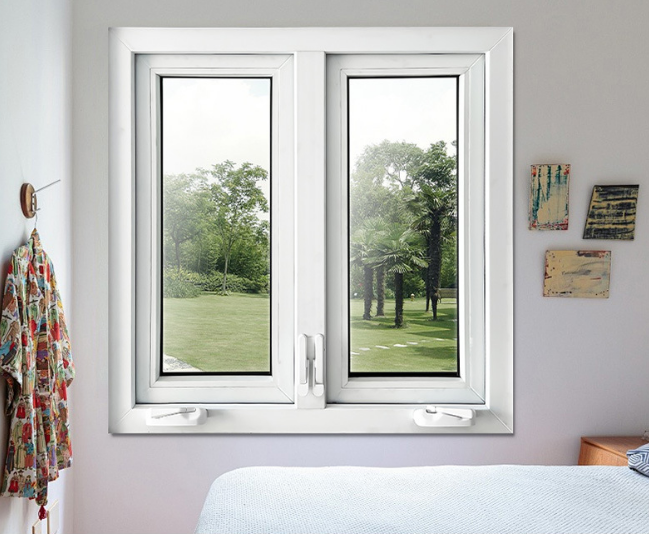
6. Worked example: product 8037 in coastal high-humidity conditions
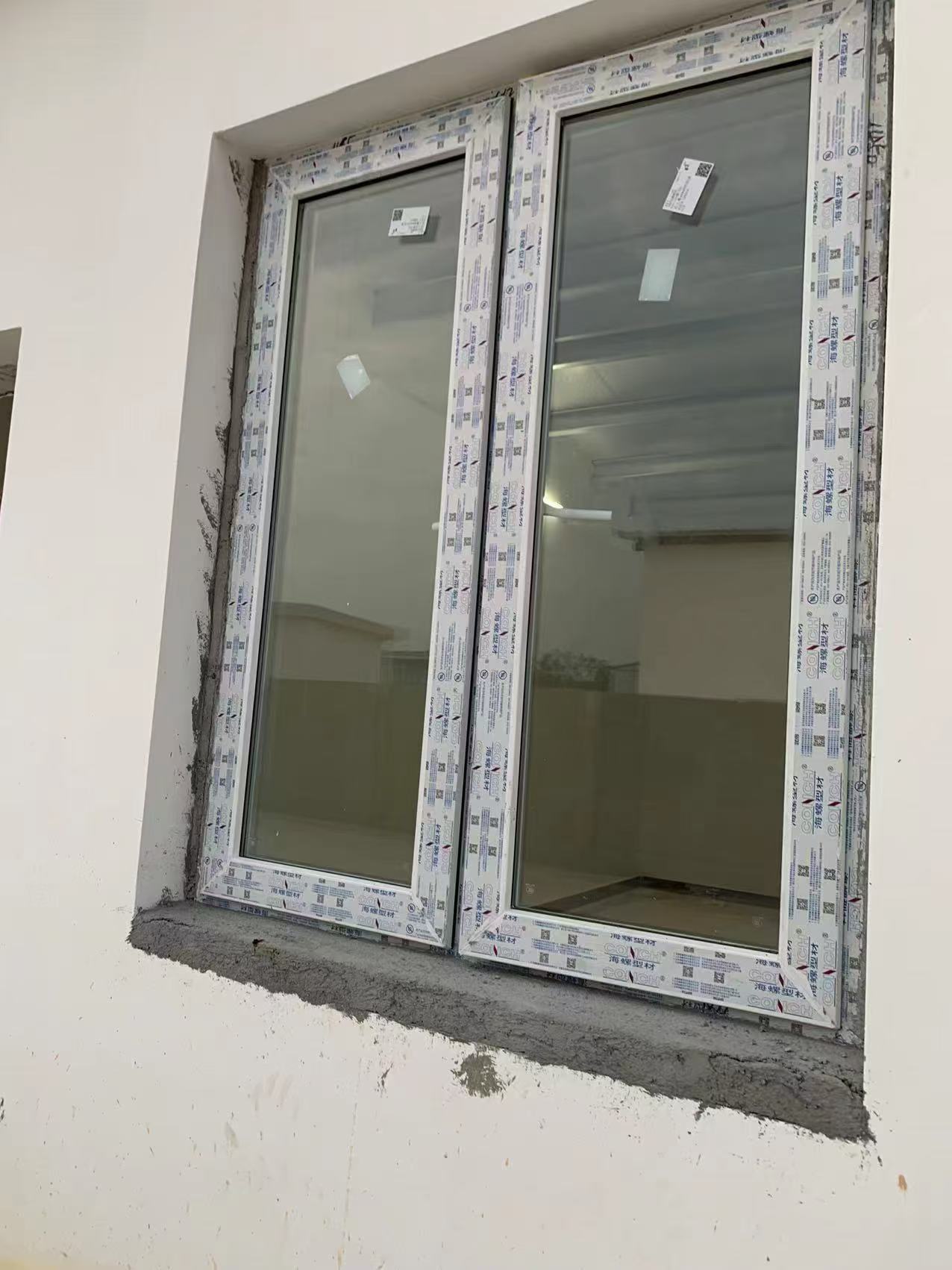
Product 8037 is the UPVC Window offered in models BR58 and HF88. Its stated special requirements are wind-pressure resistance, sound and heat insulation, and water tightness for coastal high-humidity areas. The application operates under outdoor, coastal high-humidity and strong-wind conditions within the window industry, and models BR58 and HF88 are applied in residential and villa projects. The same configuration is suitable for residential building projects and for residential and commercial building projects.
In this scenario the role of product 8037 is to provide sealing performance, resist wind and rain, and provide thermal insulation and sound insulation. It operates in sliding mode, and its supporting equipment includes window rollers, EPDM sealing gaskets and pile weather strips, together with window handles, hinges and lock points, with which it must be used.
Read as specification inputs, the material values behind the sash describe what the compound can be expected to do:
Step-by-Step Breakdown: Building the Specification
- Fix the exposure and the project type first. Coastal high-humidity and strong-wind exposure is a different specification from a sheltered inland facade. Note whether the project is residential, villa, commercial or renovation, because the same product family is specified differently across those categories.
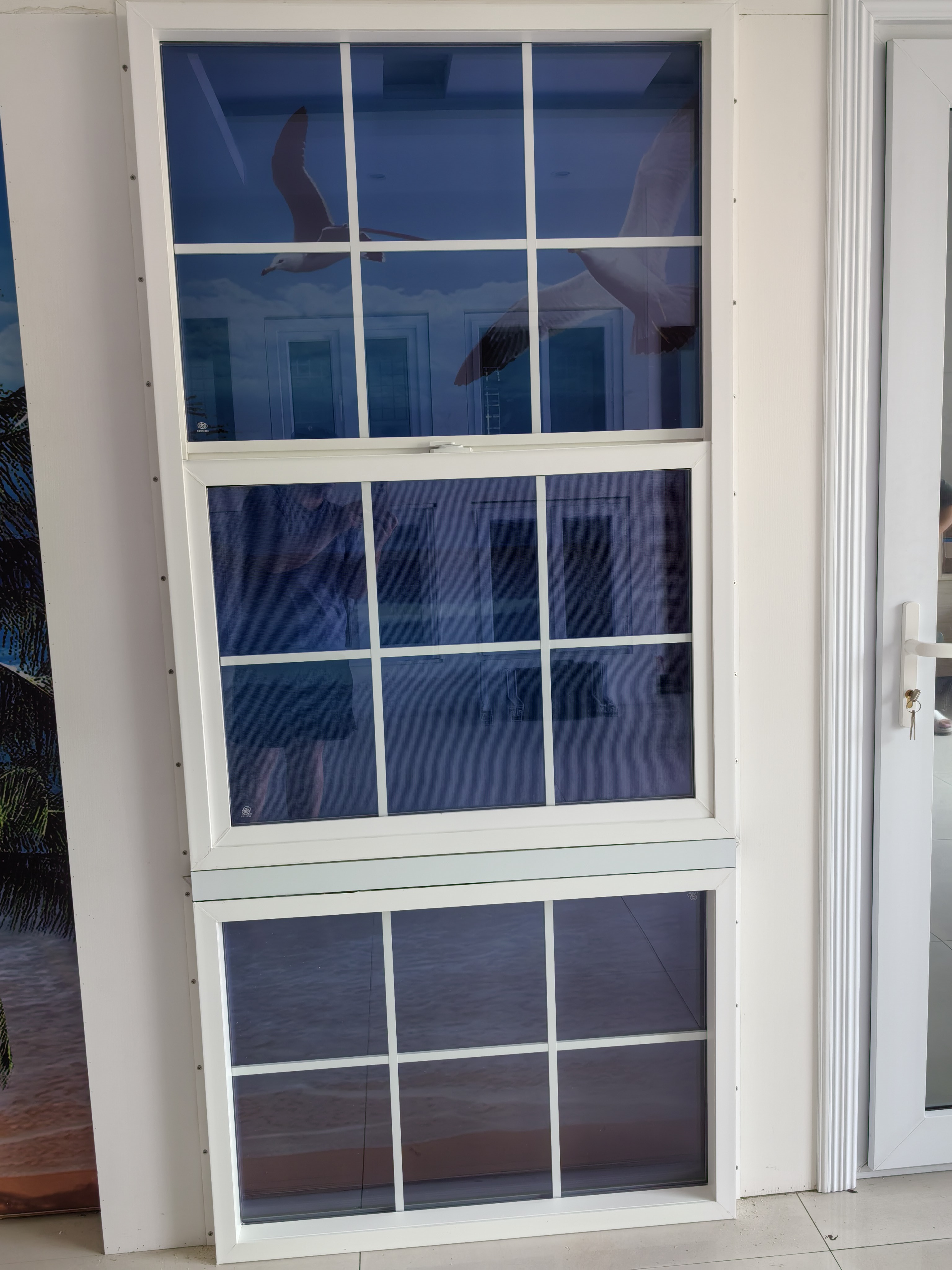
- Choose the opening type before the performance class. The factory's range covers UPVC sliding windows, casement windows, tilt-and-turn windows, crank awning windows, American-style hung windows, awning windows, hopper windows, insect screens, louver windows and insulated glass louver windows. Each type has a different load path and seal geometry, so the class must be agreed against one specific type.
- Write the three envelope parameters with a standard reference and a target class - wind-pressure resistance, water tightness and air permeability - and add the requirement that the window remains operable after the wind-pressure test.
- Specify the profile system and reinforcement. State the compliance basis required for PVC-U profiles, for example GB/T 8814-2017 requirements on wall thickness and physical properties, and confirm the profile series in writing. Conch profiles in 60, 65 and 88 series are long-term supplied and are available in co-extruded colour, laminated wood-grain finish and solid colours including dark grey and black.
- Specify the glass build-up as single-layer, double-glazed insulated, tempered safety or frosted glass, and state the thermal and acoustic targets it must meet.
- Specify hardware and sealing components by name. List window rollers, EPDM sealing gaskets, pile weather strips, window handles, hinges and lock points, and require the supplier to confirm the exact components used on the order.
- Require evidence before shipment. Ask for the quality inspection report and the certificate set that applies to the destination market. CE and ISO certificates can be provided as required.
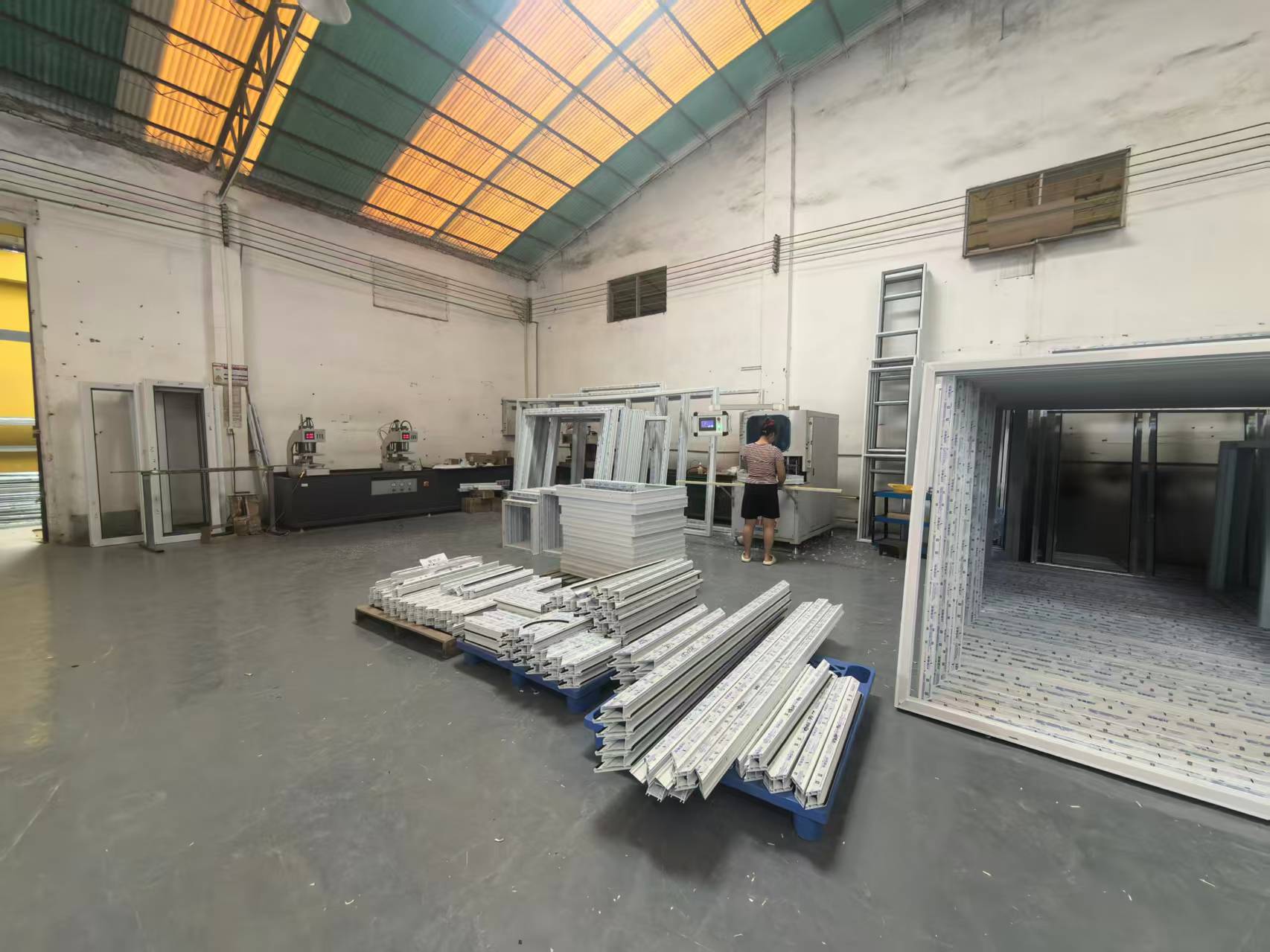
- Confirm the commercial frame. Minimum order quantity is 30-40 m2, production lead time is 10-30 days, and monthly capacity is 4,000 m2. Customization covers window size, specification and glass specification under OEM/ODM production, with technical consultancy and quality testing as the stated after-sales support.
- Sequence installation and site verification. Drainage paths, glazing blocks and seal continuity are installation-stage variables, so plan a water test on the most exposed facade before handover rather than after the first storm.
Use Cases: Where These Specifications Are Tested
Coastal residential and villa projects. This is the configuration product 8037 is specified for: outdoors, coastal high humidity and strong wind, with water tightness for coastal high-humidity areas, wind-pressure resistance, and sound and heat insulation named as the special requirements. Models BR58 and HF88 are the applied models.
Builder-led residential projects in humid climates. A recorded case covers 800 m2 of UPVC windows for a residential building, supplied to builder-type clients for architectural construction. The reported outcomes were heat-insulation and sound-insulation performance with energy-saving performance. The project highlights include corrosion-resistant hardware, safe tempered glass, low-noise sliding, water-proof and dust-proof performance, and easy maintenance. The project record states a duration of 10 years.
Commercial building projects. The same window configuration is suitable for commercial building projects, where wind pressures at height usually push the wind-pressure class beyond the residential requirement and make the hardware specification, hinges, lock points and multipoint drive, decisive.
Renovation and replacement work. Replacement projects inherit existing opening sizes, which is where OEM size customization matters. The door-side product in the same range, product 7970 in models HF60, WYK75-1 and HF88-L, is suitable for renovation projects and operates in manual opening and closing mode, with optional fire resistance and UV resistance and anti-aging performance, the same clause logic applied to a different product type.
Comparison Table: Parameter, Component and Consequence
The table maps each specification parameter to the components that control it and to the failure mode that appears when it is left out.
| Parameter to specify | What it controls | Components involved | If under-specified |
|---|---|---|---|
| Wind-pressure resistance | Structural stability under positive and negative pressure; continued operation after test | Profile system and reinforcement, glass thickness and span, hinges, lock points | Sash deflection, hardware binding, seal line opening under gust load |
| Water tightness | Resistance to water penetration at a defined pressure | EPDM sealing gaskets, welded frame corners, glazing seals, drainage and weep paths | Driving-rain leakage at interlock or sill, staining and interior damage |
| Air permeability | Air exchange through the closed window | EPDM sealing gaskets, pile weather strips, lock points and multipoint lock drive, handle force | Draughts, whistling, dust ingress, higher heating and cooling load |
| Sound insulation | Noise transmission through the assembly | Glass mass and build-up, seal continuity, gasket compression | Traffic and coastal noise transmitted indoors despite 'acoustic glass' |
| Heat insulation | Whole-window U-value and energy use | Multi-chamber profile, reinforcement, glass build-up, spacer, seal continuity | Energy penalty and failure against a legal U-value limit |
| Corrosion and aging resistance | Durability in salt-laden humid air and UV exposure | Corrosion-resistant hardware, UV-resistant and anti-aging profile compound | Seized rollers, hardened gaskets, profile yellowing and brittleness |
| Operation and sealing retention | Smooth sliding or tilting while keeping seals compressed | Window rollers, track, hinges, window handles | Stiff operation, uneven seal compression, progressive leakage |
The verified material data behind the worked example reads as follows.
| Property (product 8037, UPVC Window, models BR58 and HF88) | Value | Practical meaning for specification |
|---|---|---|
| Vicat softening point | 86 C | Indicates the temperature at which the material begins to soften under load, which matters for dark-coloured profiles in sun-exposed elevations |
| Flexural modulus of elasticity | 2840 MPa | Stiffness, the property that resists sash deflection under wind pressure |
| Tensile yield stress | 43 MPa | Strength at yield, relevant to hardware fixing points and corner loading |
| Tensile strain at break | 186% | Ductility, meaning the material yields before it fractures under gusts and thermal cycling |
| Density | 1520 kg/m3 | Consistent with a rigid PVC-U compound for extruded window profiles |
These values are material inputs a buyer can verify, alongside the profile wall-thickness and physical-property requirements referenced in GB/T 8814-2017. They are not a substitute for a whole-window test result on the finished unit.
FAQ
Which standards should be cited when specifying wind-pressure resistance, water tightness and air permeability for a coastal UPVC window project?
For projects following European practice, the framework normally cited is EN 12207 for air permeability, EN 12208 for water tightness and EN 12210 for wind load resistance, with EN 14351-1 as the harmonised product standard for windows. In the Chinese system, PVC-U profiles are commonly required to comply with GB/T 8814-2017, which addresses wall thickness, impact resistance, heat stability and anti-aging performance, and qualified test reports are expected as evidence. Where certificates are required for the destination market, CE and ISO certificates can be provided as required. The most defensible clause cites the standard, the target class and the evidence document together, and adds UV resistance and anti-aging requirements for coastal exposure.
Can UPVC windows be customized to meet a project's wind and water tightness requirements?
Yes. Production mode is OEM/ODM and customization covers window size, specification and glass specification, with monthly capacity of 4,000 m2. Product 8037 is offered in models BR58 and HF88 and operates in sliding mode; its supporting equipment includes window rollers, EPDM sealing gaskets, pile weather strips, window handles, hinges and lock points, and it must be used with window hinges and lock points. Technical consultancy and quality testing are the stated after-sales supports, which is where a buyer should raise a proposed wind-pressure or water-tightness class before placing the order.
What drives the cost when a specification moves to a higher wind and water performance class?
The main cost drivers are the glass build-up, the profile system and its reinforcement, and the hardware and sealing component set, not the frame colour. Two commercial parameters also shape budget planning: the minimum order quantity of 30-40 m2 and monthly capacity of 4,000 m2 with a production lead time of 10-30 days. It is also worth weighing lifetime performance against unit cost, since multi-chamber profiles can improve energy efficiency by up to 40% compared with traditional frames.
Can a buyer validate the window before full production?
A sample showroom is available for one-stop purchasing service, and technical consultancy and quality testing are offered as after-sales support. For performance validation, ask for the exact hardware and gasket set that will be used on the order, since a sample built with different components does not validate the specification. Review the quality inspection report and the applicable certificates at the same time.
What lead time and minimum order should be planned for a UPVC window project?
Production lead time is 10-30 days, minimum order quantity is 30-40 m2, and monthly capacity is 4,000 m2, which allows phased delivery across a project. In practice, window production is the shorter part of the chain: opening sizes and the performance specification should be confirmed before the order is released. To move from specification to quotation, contact Foshan Nanhai Yuanzhaiji UPVC Door & Window Factory through yuanzhaiji.com, or by email at 1803877678@qq.com and WhatsApp or phone at +86 130-0674-7018.
Conclusion
Wind-pressure resistance, water tightness, air permeability and sound and heat insulation are four separate obligations, and none of them can be secured with an adjective. A workable specification names a standard and a target class for each, states the profile system, reinforcement and glass build-up that make the class achievable, and lists the components that carry the performance in day-to-day use: window rollers, EPDM sealing gaskets, pile weather strips, window handles, hinges and lock points.
For coastal high-humidity and strong-wind projects, product 8037 in models BR58 and HF88 is the configuration where these clauses are already defined, with water tightness for coastal high-humidity areas, wind-pressure resistance, and sound and heat insulation named as special requirements. The remaining work is to write those requirements into the project document with the evidence attached, so that the finished window can be checked against the clause rather than against an impression.
Specification Review, Samples and Quotation
Send your project exposure, opening type, sizes and target performance classes, and the factory will confirm the matching profile system, glass build-up, hardware set and sealing components, together with a sample and quotation package.
Foshan Nanhai Yuanzhaiji UPVC Door & Window Factory
Website: yuanzhaiji.com
Email: 1803877678@qq.com
WhatsApp / Phone: +86 130-0674-7018
Have Questions or Need More Details?
Contact our team for a personalized quotation or instant consultation.
Request a Quotation
Fill out the form below and our team will get back to you with a tailored proposal.
WhatsApp Direct Chat
Prefer to chat in real-time? Message us on WhatsApp for instant assistance & quick answers.
- Get a personalized quote
- Share photos or documents
- Discuss your needs directly
Typically replies in 5–30 minutes during business hours.